
About
Our Mission
The University of Arkansas Press advances the mission of the University of Arkansas by publishing peer-reviewed scholarship and literature of enduring value. We curate a list of books by authors of diverse backgrounds writing for specialty as well as general audiences in Arkansas and throughout the world.
May 1980 -
The University of Arkansas Press was established
The University of Arkansas Press was established in May 1980 as the publishing arm of the University of Arkansas by the Board of Trustees of the University. Miller Williams was named the first director of the press, and Dr. Willard Gatewood was named the chairman of the first Press Committee.
- December of 1980
The McIlroy House was formally opened as the home for the Press
The McIlroy House was built in 1910 and was the longtime home of the McIlroy family, four generations of whom contributed to the expansion of the region, the growth of the town, and the mission of the university. Learn more about our house.
May 1981 -
In 1981 the Press published its first three books
The Governors of Arkansas: Essays in Political Biography, edited by Timothy P. Donovan and Willard B. Gatewood, Jr.; In the Land of Dreamy Dreams by Ellen Gilchrist; and The Hound of Conscience: A History of the No-Conscription Fellowship, 1914–1919 by Thomas C. Kennedy.
- Present Day
The Iconic Colophon
Among the things unchanged has been the iconic colophon, designed by press designer Martha Sutherland. The colophon features a die-cut rendering of the house with its front-facing gables, half-timbered dormers, multiple masonry chimneys, and the flying stone archway that give the McIlroy’s Ozark Tudor castle its memorable façade. This emblem of McIlroy is printed on the bottom of the spine of every press book—an ever-growing catalogue of over a thousand titles.
The McIlroy House
The McIlroy House was built in 1910 and was the longtime home of the McIlroy family, four generations of whom contributed to the expansion of the region, the growth of the town, and the mission of the university.
William McIlroy set out from North Carolina in 1835 and settled in the Ozarks where he acquired a 160-acre farm on the west side of Fayetteville and established the state’s first chartered bank.
In 1871, in response to the First Morrill Land-Grant Acts that made available federal funds for the establishment of state institutions of higher learning, he and a group of residents, that included Lafayette Gregg, raised money and lobbied the state assembly to designate Fayetteville as the site of the future University of Arkansas.
Once built, he and his descendants made their homes in a nearby row of residences along Ozark Avenue (now McIlroy Avenue). The only one of these houses that remains is the Tudor-style stone house, which the family called “the castle,” that belonged to his son William Hayden McIlroy, who bit by bit provided much of the land that now comprises the university campus.
In 1980, nearly 150 years after the McIlroys came to Arkansas, the newly founded University of Arkansas Press moved into the house after an extensive renovation that transformed a family home into a working space for a hive of editors, typesetters, and publishing professionals that set out to ameliorate a dearth of scholarship on the region and to distinguish the academic community as an important outpost of research and literature.
Though the structure still retained the character and charm of a family residence, bedrooms and closets became offices and archives, a conference table took the dining spot, and a Xerox machine displaced the cookstove. Vestiges remained, too: the retrofitted coal furnace in the basement, the surprisingly splendid fireplace in the marketing office, and the missing baluster where young Hayden Jr. once got his head stuck in the staircase banister.
Now, after more than forty years of residence in this place, a new family of sorts emerged, one made up of generations of bookmakers and authors who have shared the gamut of life’s successes and failures—raving reviews and frustrating errata, celebratory feasts and devastating fires, babies born and friends lost, and just about every imaginable kind of insect infestation.
Our Staff
Director and Publisher
Mike Bieker
mbieker@uark.edu
Editor-in-Chief
David Scott Cunningham
479-575-5767
dscunnin@uark.edu
Managing Editor
Janet Foxman
foxman@uark.edu
Design and Production Manager
William Clift
wcclift@uark.edu
Business and Distribution Services Manager
Sam Ridge
479-575-3858
sridge@uark.edu
Marketing Director
Charlie Shields
479-575-7258
cmoss@uark.edu
Sales and Publicity Manager
Meagan Bonnell
479-575-4649
mbonnel@uark.edu
Our Editorial Advisory Committee

Jeannie Whayne, University Professor
Author or editor of over a dozen university press books, Whayne was the coeditor with Willard B. Gatewood Jr. of the first title published by the University of Arkansas Press: The Governors of Arkansas. Whayne has been professor of history in the J. William Fulbright College of Arts and Sciences at the University of Arkansas since 1990, where she has served as chair of the department and editor of the Arkansas Historical Quarterly. She has served as chair of the press committee since 2016.
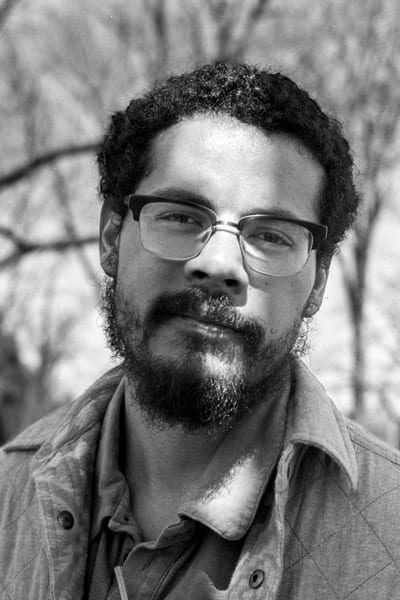
Geffrey Davis, Associate Professor of English
Geffrey Davis is associate professor of English and teaches in the Program in Creative Writing & Translation and with the Rainier Writing Workshop, Pacific Lutheran University’s low-residency MFA program. He author of two collections of poetry: Night Angler (2019), winner of the James Laughlin Award from the Academy of American Poets, and Revising the Storm (2014), winner of the A. Poulin, Jr. Poetry Prize. His poems have appeared in numerous publications, including The Atlantic, Crazyhorse, New England Review, The New York Times Magazine, The New Yorker, Oxford American, PBS NewsHour, and Ploughshares. The poetry editor for Iron Horse Literary Review, he has been named a finalist for the Hurston/Wright Legacy Award and has received the Anne Halley Poetry Prize, the Dogwood Prize in Poetry, the Porter Fund Literary Prize, and the Wabash Prize for Poetry, as well as fellowships from Bread Loaf, Cave Canem, the National Endowment for the Arts, the Vermont Studio Center, and the Whiting Foundation for his involvement with The Prison Story Project, which strives to empower incarcerated women and men in Arkansas to tell their own stories through writing.

Jennifer A. Greenhill, Endowed Professor of Art
Jennifer A. Greenhill’s research focuses on 19th and early 20th century US art and visual culture, although she regularly steps outside of that framework to explore topics such as the visuality of literary humor and the politics of racialized beauty in 1960s film. She is the author of Playing It Straight: Art and Humor in the Gilded Age (University of California Press, 2012), and a coeditor of A Companion to American Art (Wiley-Blackwell, 2015), a collection of thirty-five essays by leading scholars who debate the geographic, historiographic, material, and conceptual borders of the field. Greenhill’s current book project explores the efforts of commercial artists, art directors, advertisers, and psychologists to develop visual strategies of suggestive advertising circa 1900.

Michael Pierce, Associate Professor of History
Michael Pierce is associate professor of history and specializes in the modern US, Arkansas, and labor and race. He received his A.B. from Kenyon College and a Ph.D. from Ohio State University. His book, Striking with the Ballot: Ohio Labor and the Populist Party, appeared in the spring of 2010 from Northern Illinois University Press. Pierce‘s current project looks at race and the labor movement in postwar Arkansas, with a particular emphasis on Little Rock‘s Central High crisis. Pierce is also the co-author of In the Workers‘ Interest: A History of the Ohio AFL-CIO, 1958-1998, co-editor of Builders of Ohio: A Biographical History, and co-editor of the forthcoming Race, Labor, and Violence in the Delta: Essays to Mark the Centennial of the Elaine Massacre. His essays have appeared in Labor History, Agricultural History, the Arkansas Historical Quarterly and various edited volumes. He serves as associate editor of the Arkansas Historical Quarterly.

Shirin Saeidi, Associate Political Science Professor
Shirin Saeidi is associate professor of political science and the director of the King Fahd Center for Middle East Studies at the University of Arkansas. She earned a BA in government and politics from the University of Maryland, College Park, and her PhD in politics and international studies from Cambridge University. She has published numerous articles and book chapters that have appeared in Gender & History, Citizenship Studies, International Journal of Middle East Studies, International Studies Review, and the American Journal of Islamic Social Sciences. Her book, Women and the Islamic Republic: How Gendered Citizenship Conditions the Iranian State, was published by Cambridge University Press in 2022.

Mike Bieker, Director and Publisher
Ex officio

David Scott Cunningham, Editor-in-Chief
Ex officio

Margaret Sova McCabe, Vice Chancellor for Research and Innovation
Ex officio